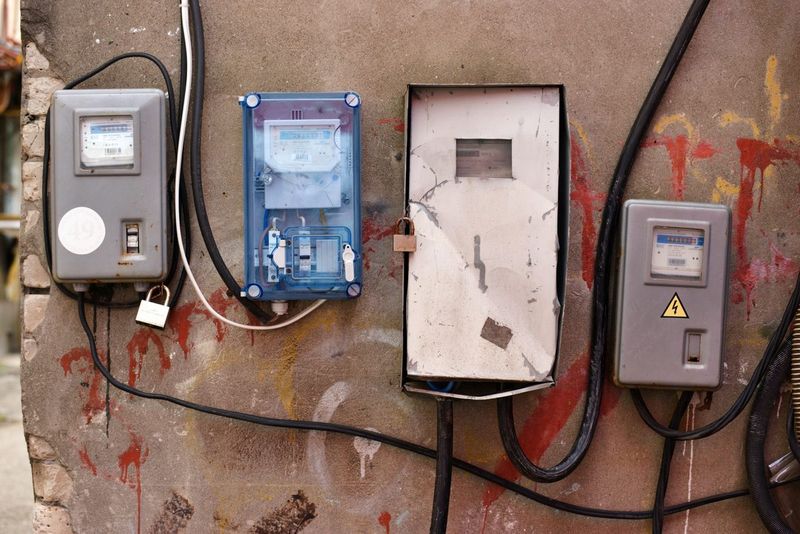
The letter said 31 October in bold, on the second line, and I put it on the fridge under a magnet shaped like a pineapple on Wednesday 7 October. It is our end-of-fix letter. The 12-month fixed energy price we chose on 13 October last year runs out in nineteen days, and what happens next depends on whether I do something.
We put the heating on for the first time this autumn on Saturday evening, after the engineer had been for the boiler service. So it feels like the right weekend to write down where we are.
Our year in numbers
I've written the readings off the smart meter display on the kitchen windowsill into a notebook every Sunday since November. From 1 November to 30 September, plus a guess for October based on last October, our year comes to about 2,910 kWh of electricity and 10,960 kWh of gas. In 2025 it was 2,980 and 11,400. Electricity is down 70 kWh, and gas is down 440, which I put down to a milder March and the draught strip on the front door.
On the fix, electricity is 24.6p a unit plus a 49p daily standing charge, and gas is 6.1p a unit plus 29p a day. Run our year through those and it comes to £1,669.12. We've been paying £142 a month, which is £1,704 over twelve months, so we should finish the fix about £35 in credit. In June, by my own rough sums, I thought we were £58 better off than the variable price we had before. That was against the old variable rates, and I wouldn't try to stretch it any further.
What happens if I do nothing
The letter is clear about this. On 1 November we move to the supplier's standard variable rates, and they have given me the new unit rates and standing charges, which are higher than the ones on the fix. I put our year's usage through them on Sunday night and the total came to about £1,847, which is £178 more than the fix. The letter suggests a new direct debit of £154 a month, which is £12 more than we pay now.
Nobody has done anything wrong there. It is simply what the end of a fix looks like, and the reason I put the date on the fridge. Last time I did this I'd been on the same tariff for four years without looking. This time I've got a deadline, a pineapple magnet, and a spreadsheet with a column for it.
The questions I'm asking
I'm using two comparison sites, putting in our real usage and not their "typical household" guess, and for each deal that comes up I'm writing down the answers to the same questions:
- What is the unit rate and the daily standing charge for each fuel, as two separate numbers?
- How long is the fix, and what happens on the last day: does it roll onto a standard rate again?
- Is there an exit fee if we leave early, for example if we ever move house?
- Does the price rely on paying by direct debit, or on sending meter readings?
- What monthly direct debit would it work out at on our usage, and what usage does it assume?
- Is the price really the same for the whole term, or is part of it an introductory rate?
I'm comparing three things: another 12-month fix, a longer fix, and the variable rate. A longer fix takes the date off the fridge for two years, and I like that. But I can't tell whether prices will be higher or lower in 2028, and neither can anyone I know, so I'm making the comparison on what I know, which is how much we use. I'm not naming any supplier, and I'm not saying what I'll choose, because a family's usage and a family's feelings about risk are specific to that family. Check your own usage.
At work we brace for the first cold Monday of November, which this year will be 2 November. The no-heat calls are always a mix of boilers that are properly broken and ones that were never switched back on after the summer. I'd like to have decided by then, if only so that I'm not one of the people ringing.
I'm going to decide on Sunday 25 October, the day the clocks go back, and I've written it on the whiteboard under "extra hour".